Author: Karen Masters
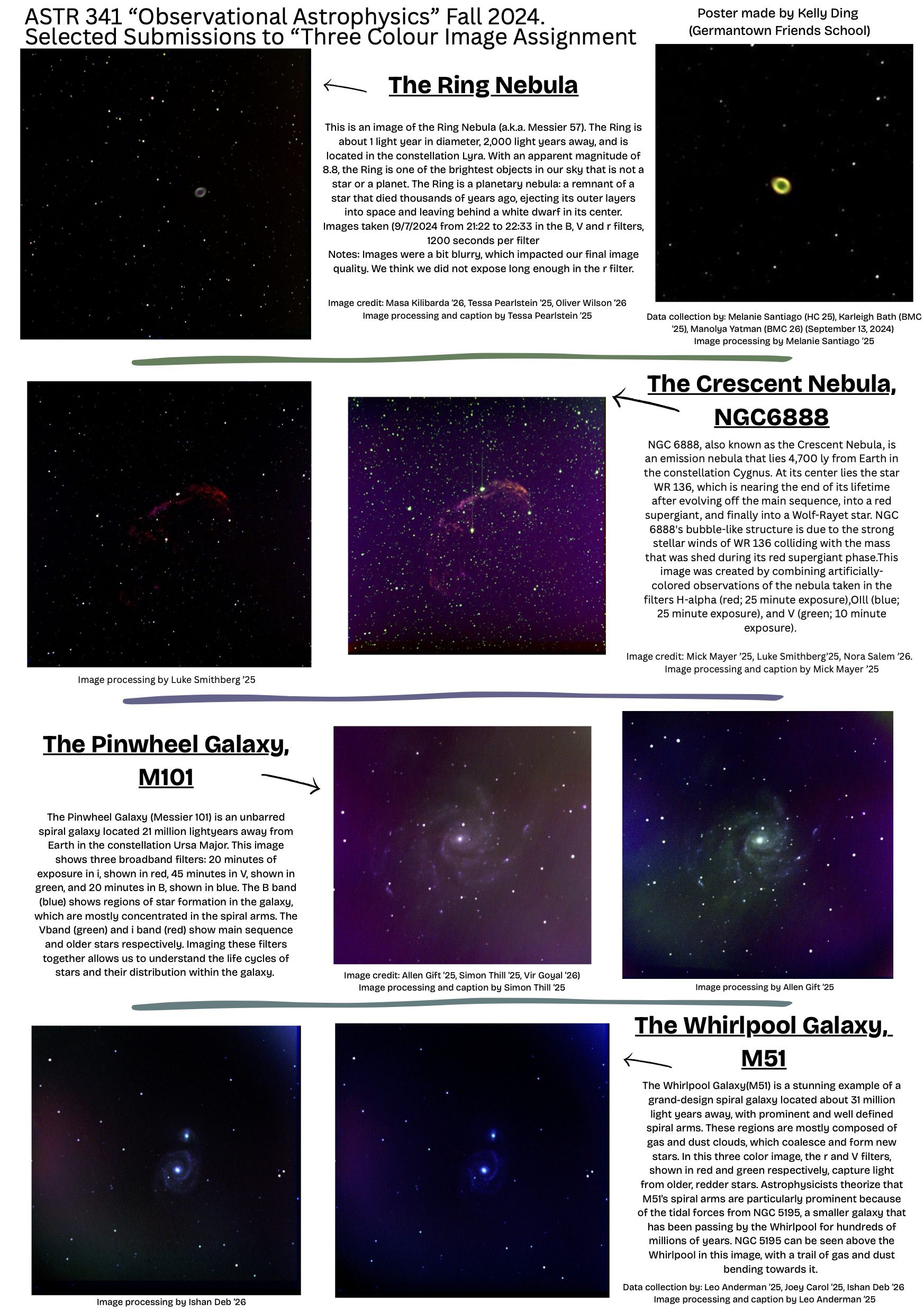
Fall 2024 Observational Class Images
Fall 2022 Observational Class Images
A very belated post of images taken in the Fall 2022 semester with our telescope.
This assignment is intended to give students the opportunity to practice taking imaging data with the 16” telescope and CCD, and to learn how to do basic image calibration and alignment using AstroImageJ.
The variety of colour choices should help with understanding about how to observe extended objects through a telescope, and how the colourful astronomical imagery, which is so common in our textbooks, and all over the internet, is made.
The goal was simply to take an image of a Messier list object (e.g. star cluster, nebula or galaxy) which you will then process with standard procedures in the open source AstroImageJ software to make a well composed and attractive image.
Students were also asked to write a caption suitable for an “Astronomy Picture of the Day” like display.
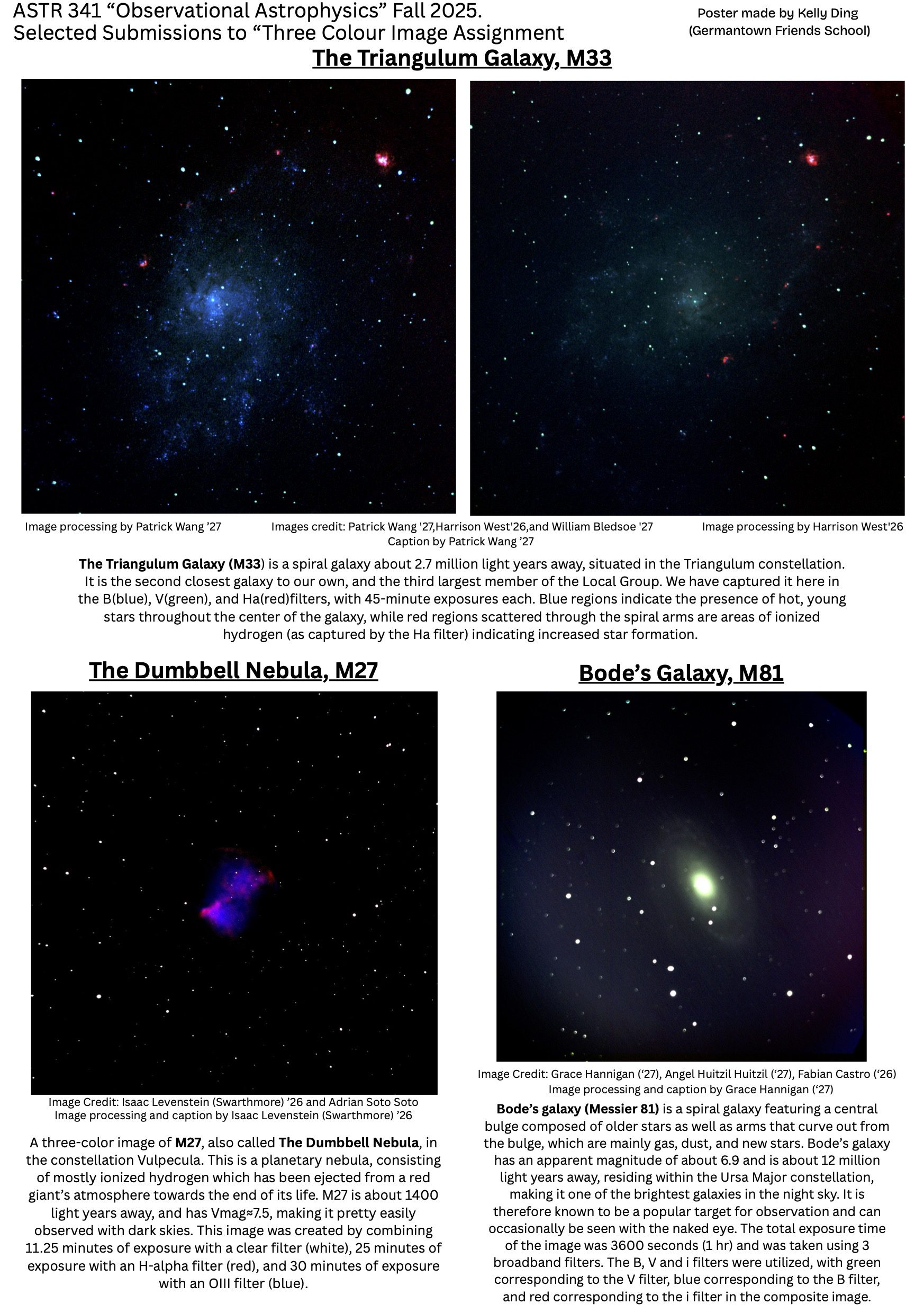
This shows a selection of the 18 submissions (from 7 observing groups) from Fall 2022.
The Crab Nebula, M1
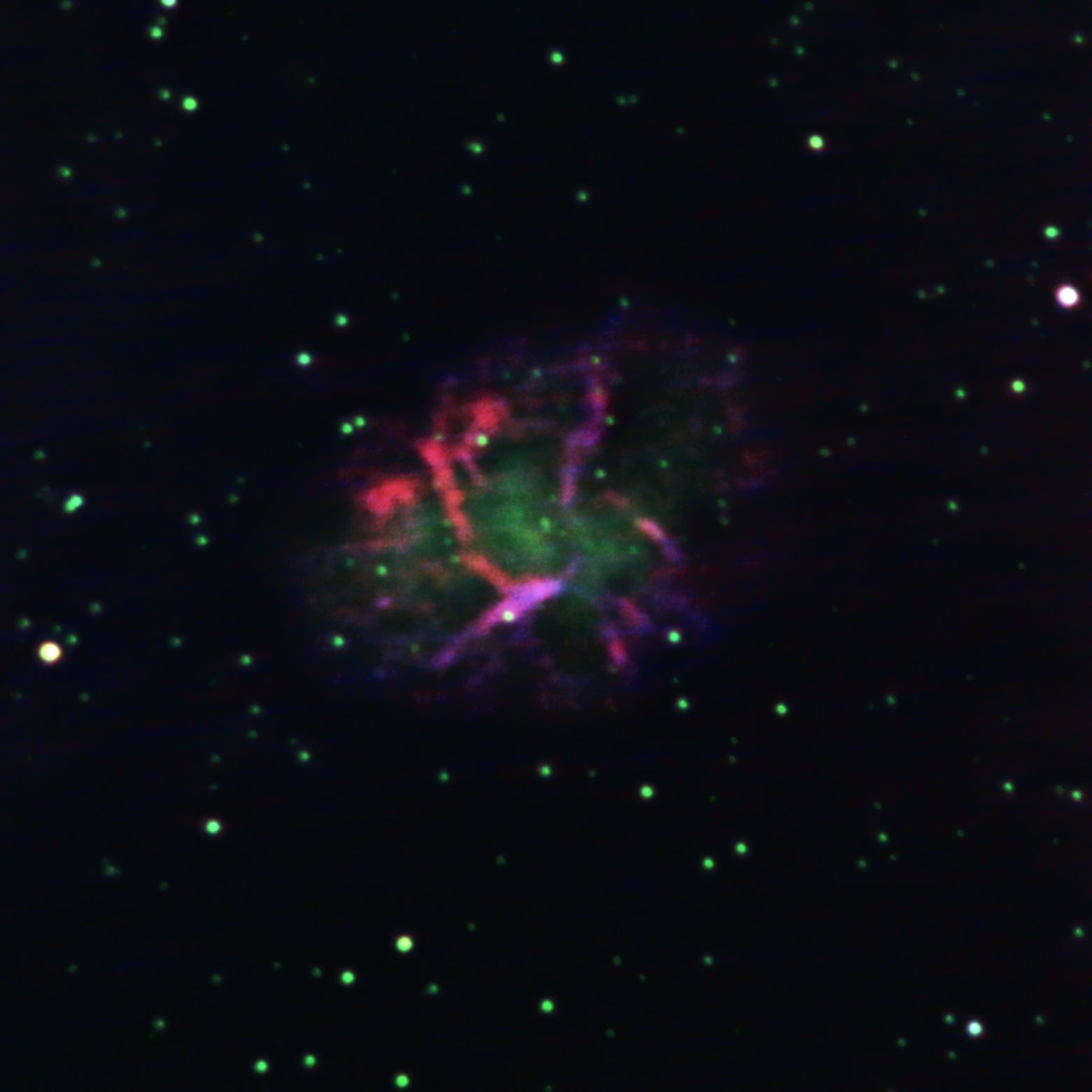
Data Collection by Anubhav Sharma ‘23, William Flanders, Darshan Patel ‘24
Processing and caption by Darshan Patel ‘23
The Eagle Nebula, M16
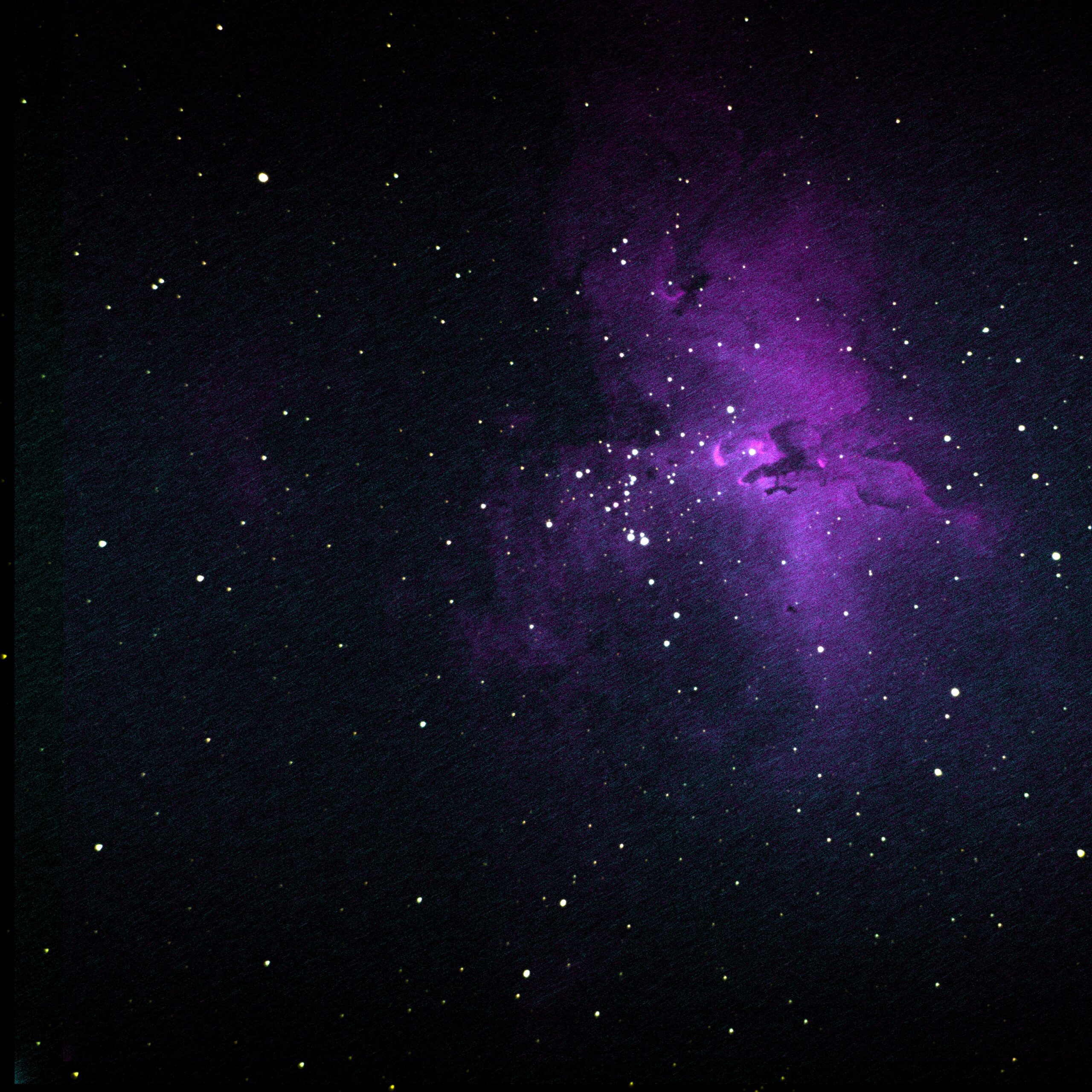
Data Collection, Processing and Caption by Hedy Goodman ‘23 and August Muller ‘23
Globular Cluster, M22
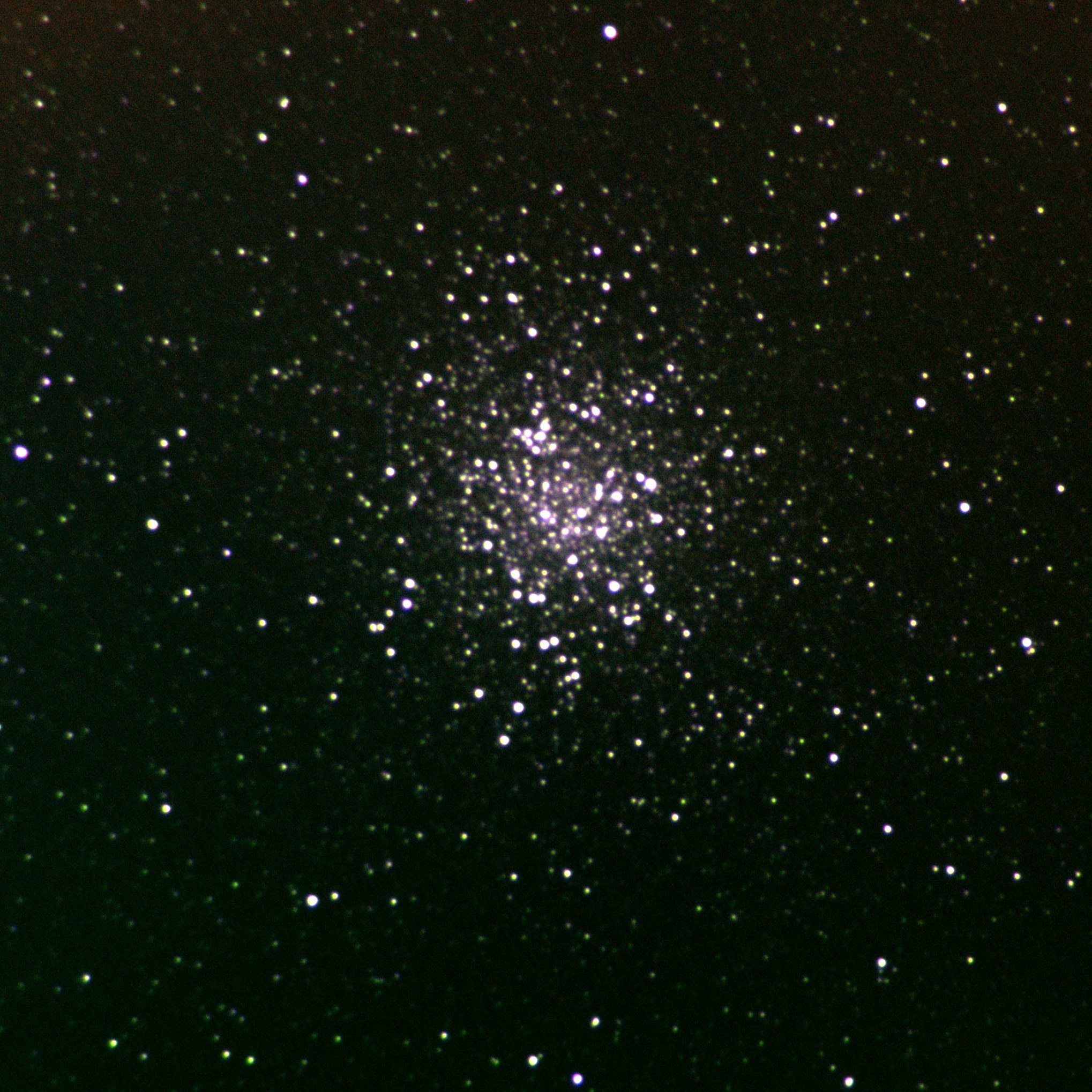
Data by Ben Alexander ‘24, Lydia Guertin ‘24, Becca Lindenbam ’24
Processing and caption by Ben Alexander ‘24
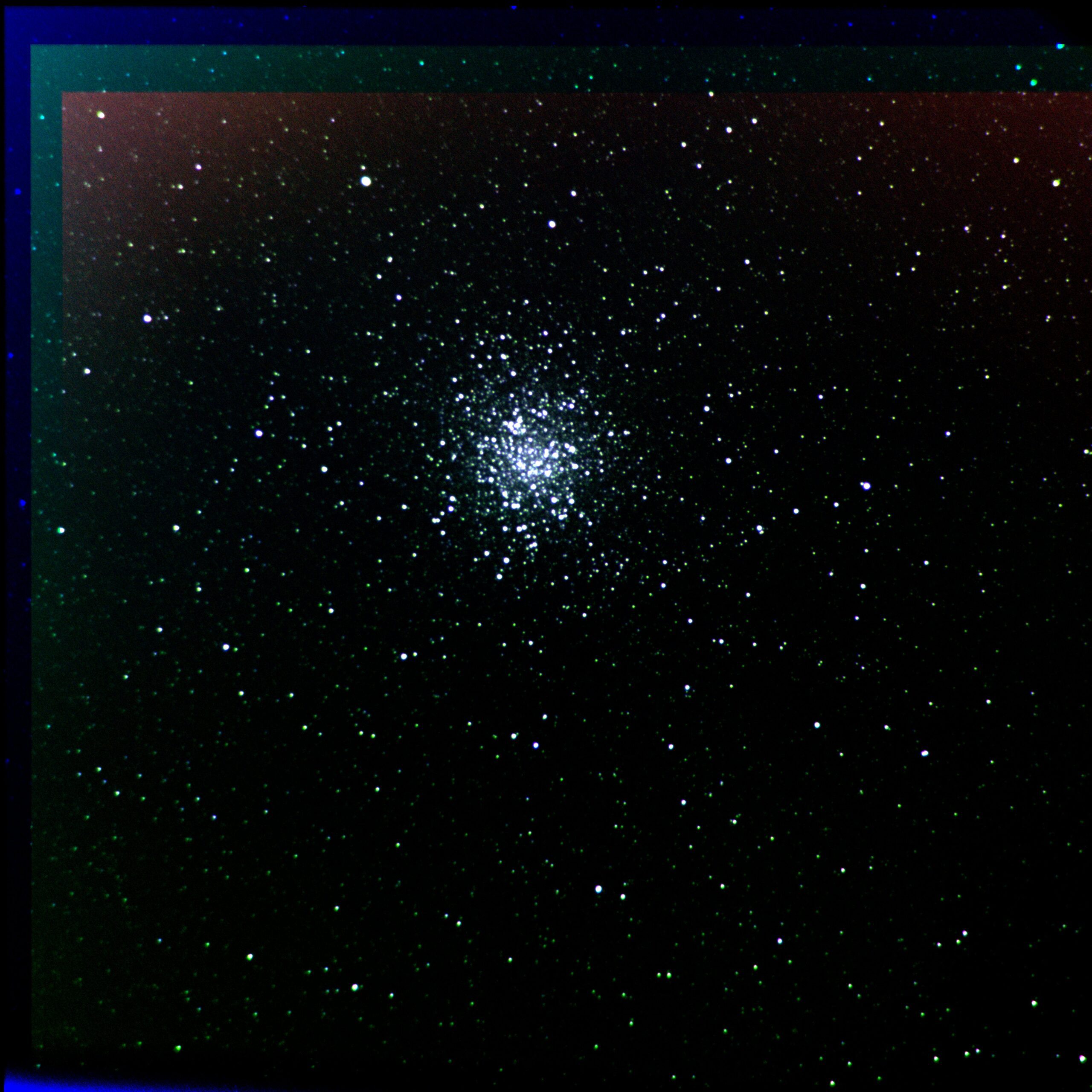
Data by Ben Alexander ‘24, Lydia Guertin ‘24, Becca Lindenbam ’24
Processing by Becca Lindenbaum ‘24 caption by Lydia Guertin ‘24
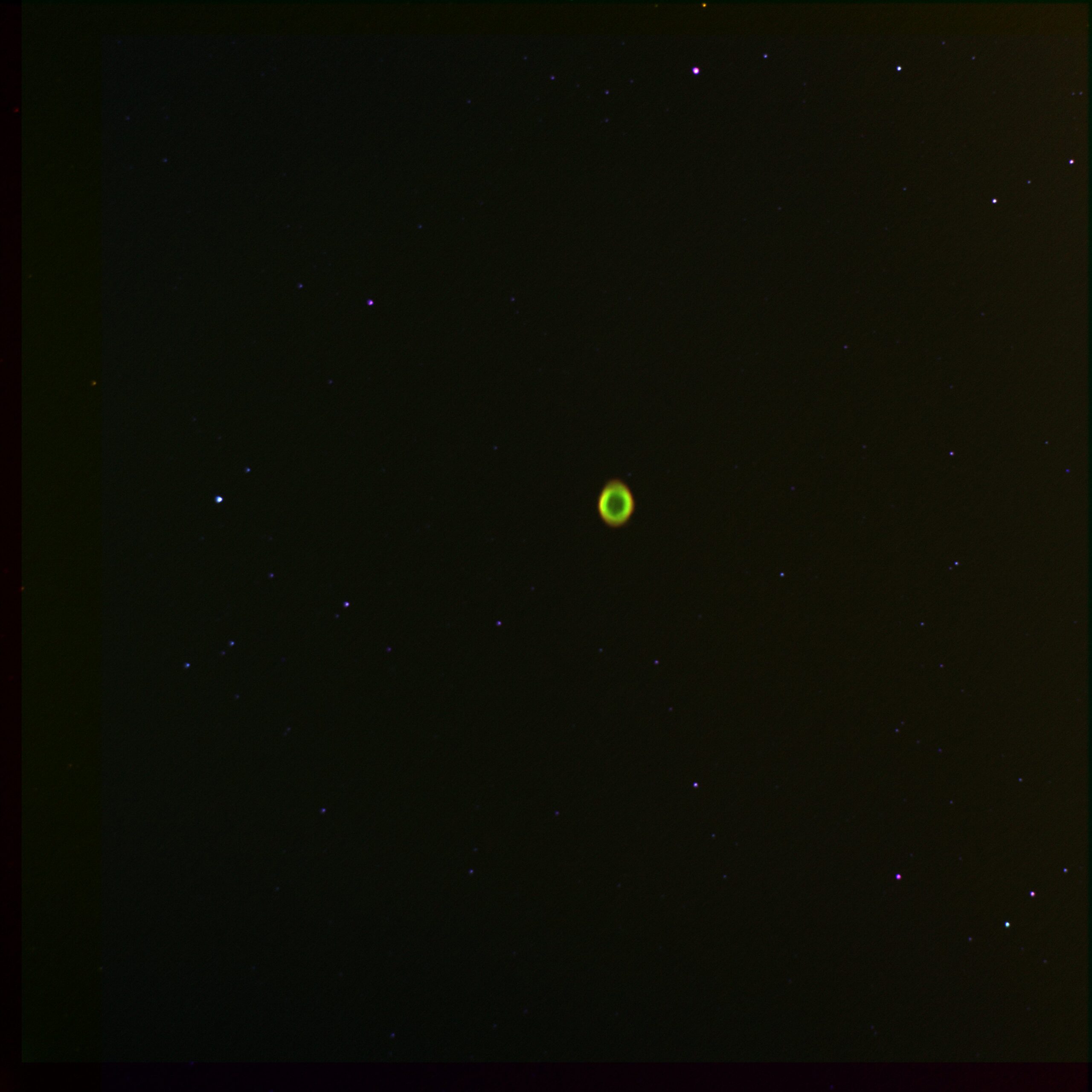
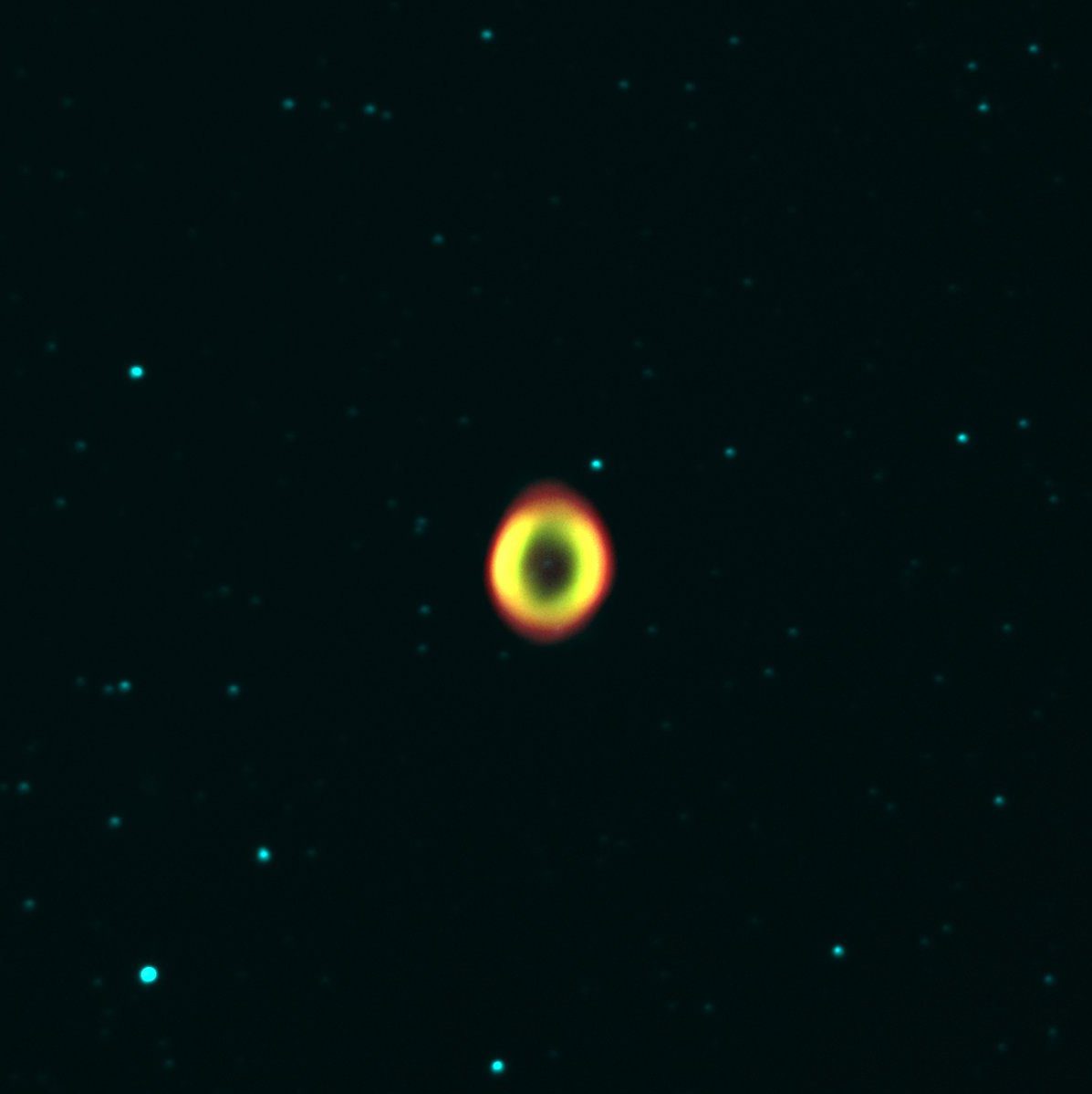
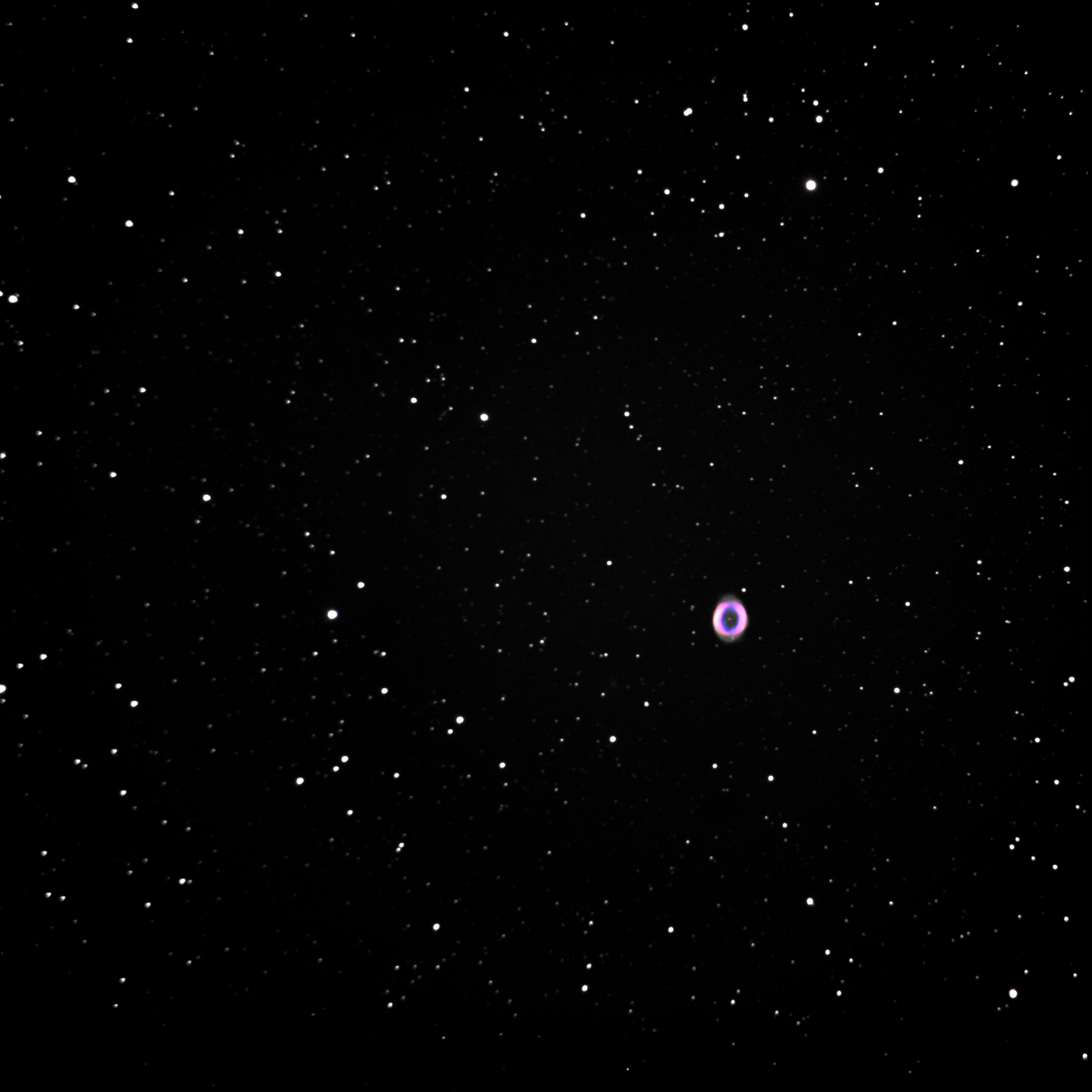
The Ring Nebula, M57
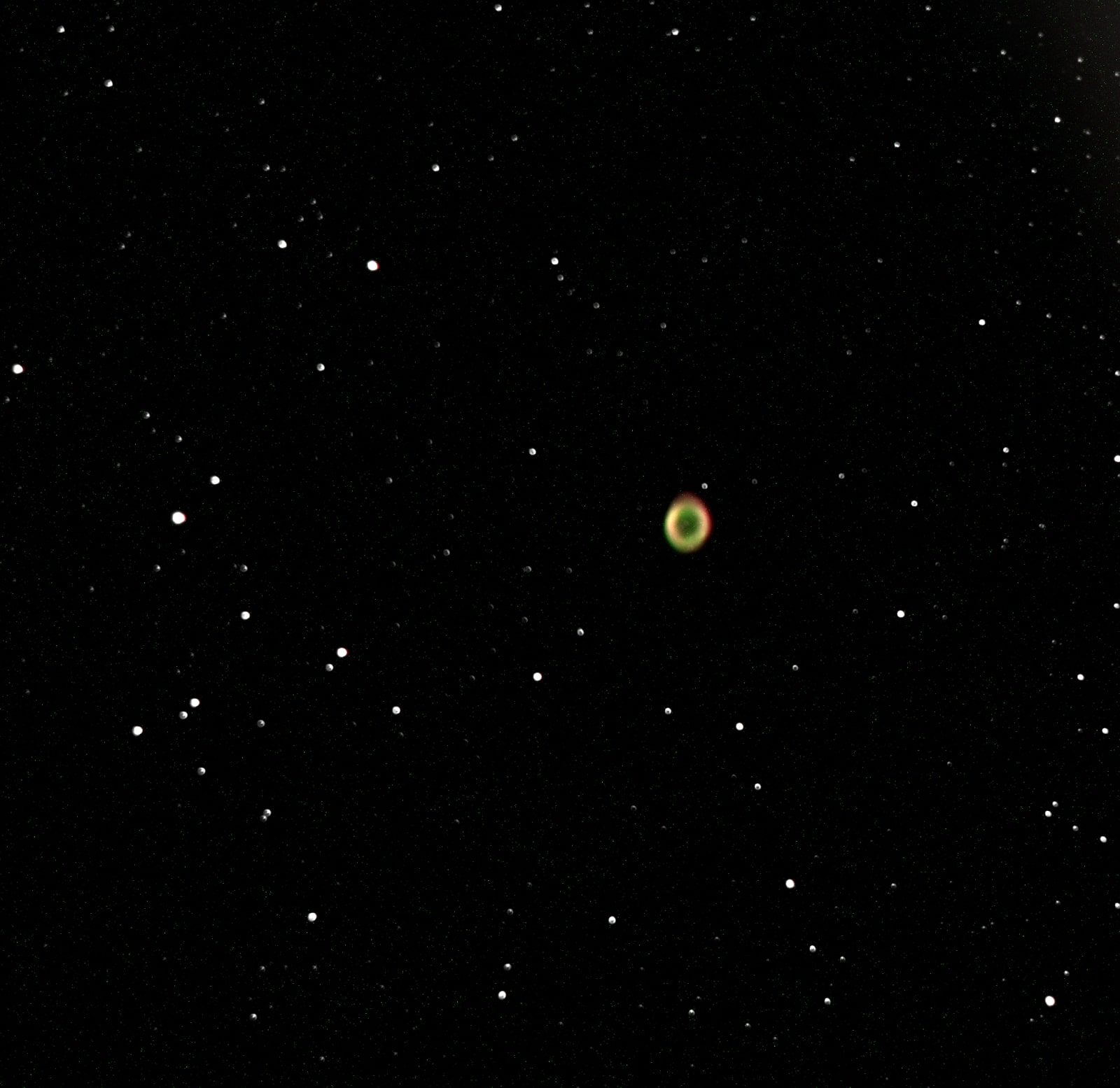
The Ring Nebula (M57) is one of the most well known nebulae in the northern hemisphere. It dwells in the constellation of Lyra, and every summer it looks down from heaven. It is about 1 lightyear across and 2500 lightyears away from us. It is a planetary nebula – the colorful atmosphere is forged by the dying sun-like star in the center through ionization. We took this image on September 8th, 2022 with a 16-inch telescope and a 4096 pixels × 4096 pixels CCD. The red color of the outer part of the ring represents Hɑ emission; the green color of the inner part represents the doubly ionized Oxygen emission; and the brightness scale is provided by the image without filters. These ionized emissions differ the Ring Nebula from the other (white) stars in the background.
Image credit: Xingyun Yang ‘24, JT Turner ‘24, Intouch Srijumnong ‘24
Caption by Xingyun Yang
Processing by JT Turner ‘24
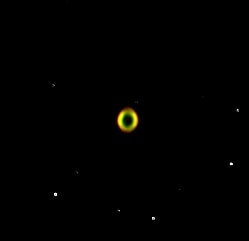
Processing by Indy Srijumnong‘24
Processing by Emma Martignoni, Caption by Petra Megistu
The Ring Nebula, M57, is one of the four planetary nebulae in the Messier catalog, having an apparent magnitude of 8.8. As characteristic to planetary nebulae, M57 is most distinctly identified by its unique ring shape representing the ionized outflow of gas from the remnant core of a dying star. This ring shape, however, is our perceived presentation of the thin spherical shell of ejected material from the white dwarf as projected onto a side view. Although it is difficult to see the central white dwarf, the ejected material is visible as a colorful annular halo observed in the different narrowband emission filters. Since the outer regions of gas are at a cooler temperature, the red outer halo reflects H-alpha emission resulting from relatively low energy photons, whereas the green color of the inner ionized gaseous regions show O-III emission due to the higher energy photons from the evolving white dwarf. Hence, the surrounding ejected gas and dust material contain ionized H-alpha and O-III accumulated in an apparent ring structure enclosing the dying star, while the surrounding stars shown in blue display portions of the Lyra Constellation as imaged using an open filter.
Eclipse Glasses Recycling for Astronomers without Borders

Haverford College Astronomy signed up to be an eclipse glasses recycling point for Astronomers without Borders, and the response has been overwhelming. We are inundated with mail containing glasses, and notes sharing experiences of the eclipse and hopes for children all over the world to enjoy future ones.




We are a pretty small observatory here. Haverford College had two astronomy faculty, embedded within a joint Astronomy-Physics department of six faculty, a few instructional and research staff. Lately we graduate joint Physics-Astronomy classes of about 20-30 students, 25% of whom are in the astronomy program.
The students run Public Observing at our Strawbridge Observatory about three times a semester, which are fairly popular.
We held an eclipse glasses vetting event on Saturday 11th May 2024, which doubled as a goodbye party for our Senior Majors involved in running Public Observing at Strawbridge Observatory.

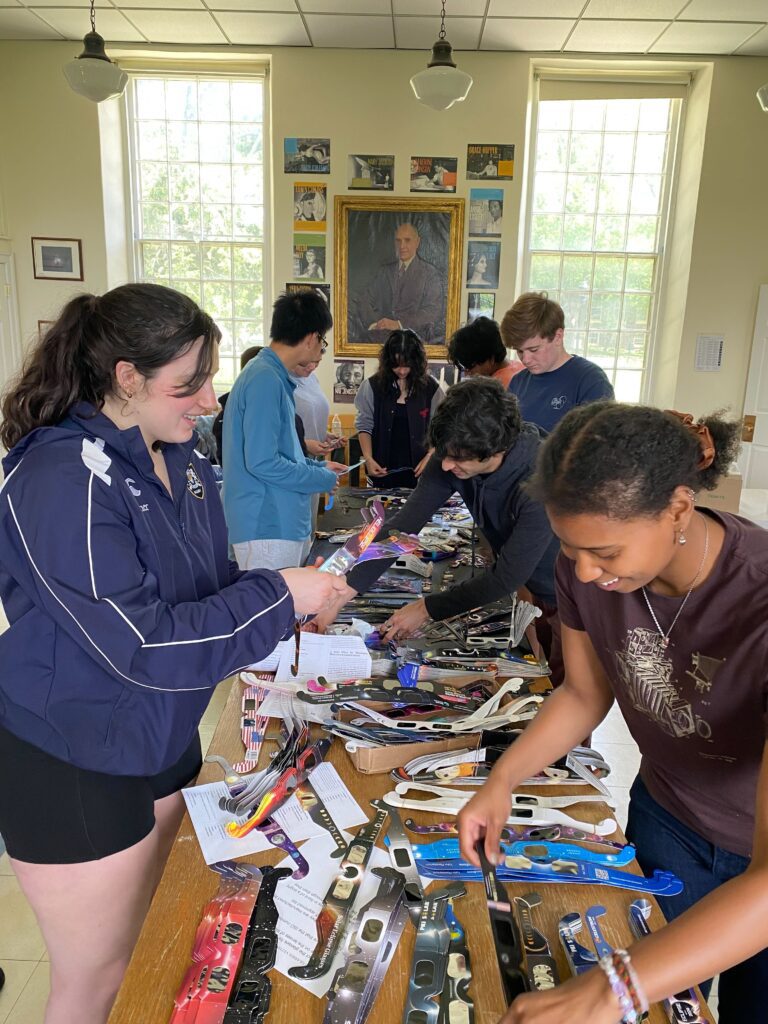
The glasses keep coming, and many students have now left for the summer. I (Karen Masters) have been sorted some during telecons, but we’ll have to plan another event (or two or more) to get through. I will try to organize one this summer, and one in the Fall when most students return.
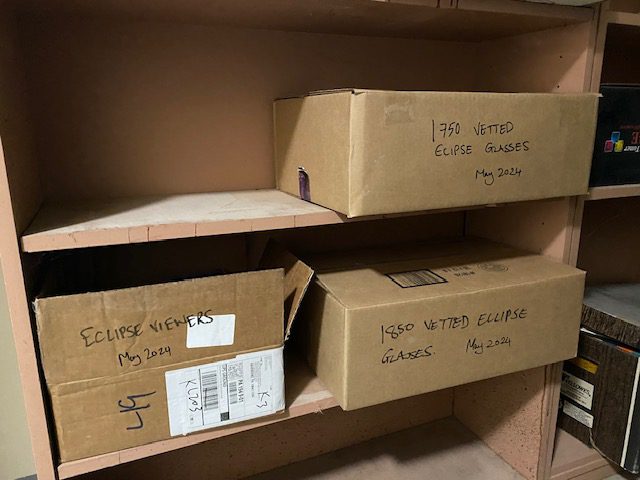
Currently we have about 4,000 glasses vetted and stored ready to go (in two boxes) once Astronomers without Borders lets us know what to do with them. We have several thousand more in the process of being vetted.

The “Green Comet”
We are getting a lot of requests for comet viewing because “the Green Comet” has been in the news so much.
Sadly, despite the hype, it is a very tricky object to spot without binoculars or a telescope – especially locally because of the light pollution in the area (see the Dark Skies Advice for what you can do to help reduce local light pollution). The comet is very large in the sky, which also makes it low surface brightness (i.e. faint). I have had people reach out really disappointed that they tried and failed to see it, which makes me sad. I hope they don’t get discouraged from stargazing – the “normal” stars are beautiful too.
Overall it’s a tricky object for us from even our campus telescopes, both because of the light pollution (both wider area, and on campus lighting, especially the field lights when they are on), but also the direction it is in puts it mostly behind a large tree to the north of the observatory.
However on the night of January 24th, students Darshan Patel ’23 and Xingyun Yang ’24, and visiting professor of astronomy and physics Islam Khan obtained the below image of the comet using our 16″ telescope and its CCD. Darshan processed the three sets of images they took to produce the colour images below. I believe this image was taken by looking very carefully through the branches of a tree!
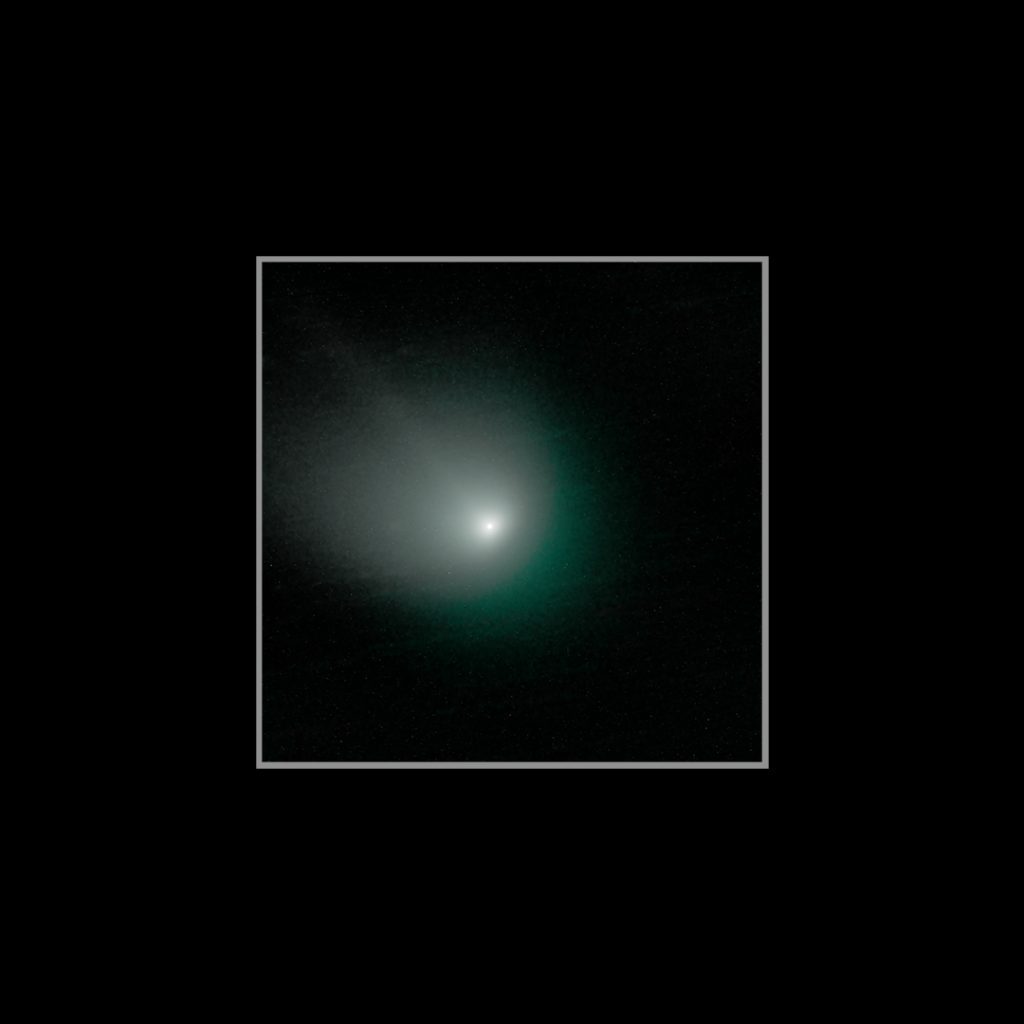
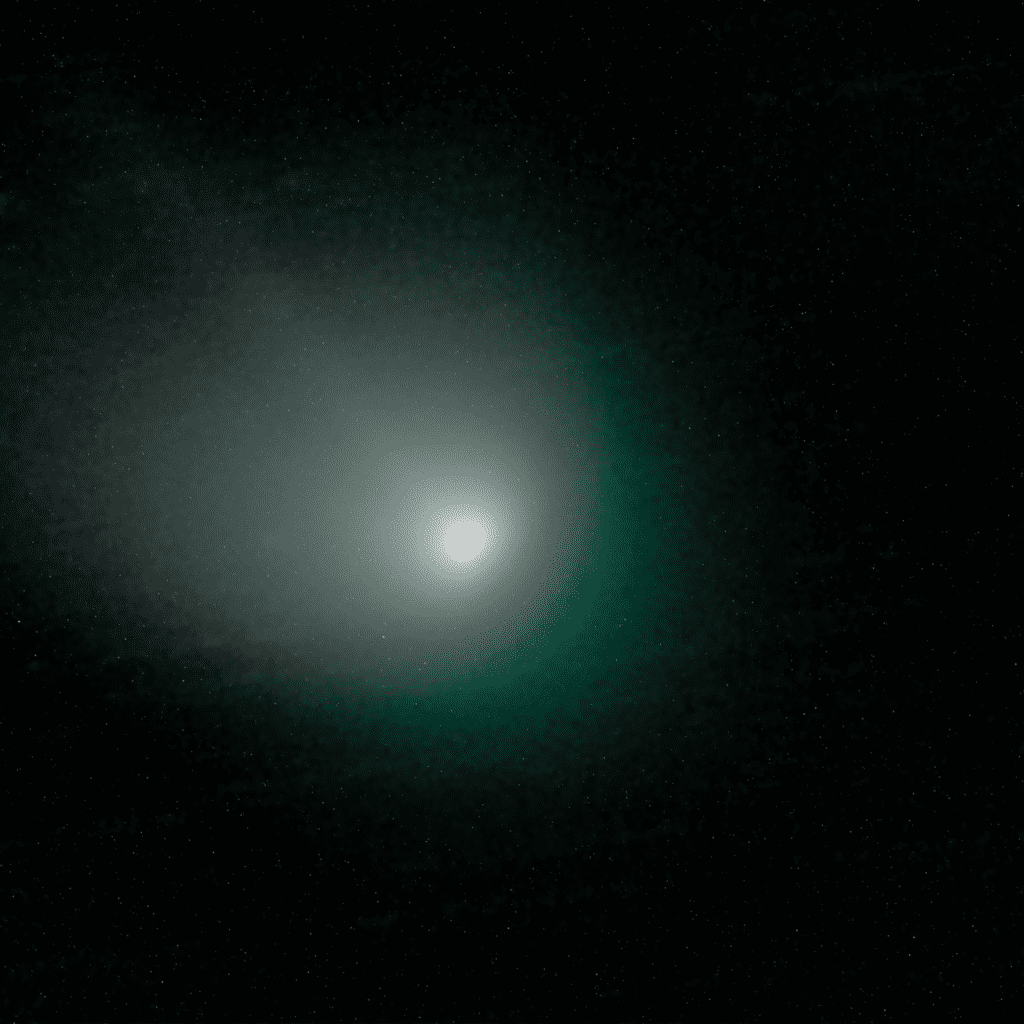
We will try to observe it if it’s clear on Feb 10th (our next Public Observing Session), but make no promises. Our events run whatever the weather (with some exceptions for extreme weather events), but stargazing (or comet spotting) is only possible on clear nights. Please email strawbridge.observing@gmail.com to obtain the link to reserve your free ticket if you would like to join us.
Final Fall 2020 Image – Hercules Cluster
In the final image from the Fall 2020 “Observational Astrophysics” class, we see another version of processing Hercules globular cluster data, from Shoaib Shamsi ’21.

Shoaib explains “Messier 13, or the Hercules cluster is a globular cluster of hundreds of thousands of stars in the Hercules constellation. A globular cluster is a tight collection of stars with an approximately spherical arrangement, bound to each other by gravity. These clusters are usually located orthogonally to a galaxy’s disk and often feature old stars. M13 is estimated to be about 11.7 billion years old – among the oldest objects in our galaxy. Often regarded as the finest globular cluster in the northern sky, M13 is located a mere 6.6 Kpc away with an apparent magnitude of 5.8.
We can find the Hercules cluster about one third of the way from Vega to Arcturus. Images were taken in the g, r, and i filters with 3 40s exposures for each filter. The images were taken with our Meade 16” SCT along with the FLI ProLine 16803 CCD. The cluster’s angular diameter is around 16.6’, and with our CCD we can view our images at around 0.46″ / pixels.”
The Perseus Cluster
Almost finished with our series of images made by students in the Fall 2020 “Advanced Observational Astrophysics” class.
Here’s an image made by Miranda Kong, BMC’22 using data of part of the Double Star cluster in Perseus I took over the summer.

Miranda explains: “We have used backup data for the Perseus Cluster taken by Professor Karen Masters at the Strawbridge Observatory with the 16” telescope and 4096×4096 pixels CCD. The images are taken in g, r, and i filters.
I have produced the 3-color combined image using the data. For the combination process, since the i filter indicates infrared wavelengths, I have assigned the color red to the i-filter images. Therefore, my color scheme is shifted, so I need to assign magenta to r (red), and cyan to g (green), i.e. the whole spectra is shifted blue for a little. This produced a decently balance image of which I could adjust the 3 filters to form an image of black background, and stars predominantly white. However, some of the star do appear more red or more blue (especially the small ones) than others. Since these data are just taken with gri filters, a star appearing more blue in this image simply says that it emits more blue light than other colors, i.e. its color spectrum peaks at blue. By black body radiation, we know that hotter stars tend to peak at the bluer end of the spectrum. ”
Eagle Nebula Composite from Hubble Data
For her assignment, Kate Gold BMC ’21 chose to use Hubble Space telescope data to put together with her own colour choices. I think the result is beautiful.

Kate explains: “The image above shows the Eagle Nebula (M16, NGC 6611) as observed by the Hubble Space Telescope Wide Field and Planetary Camera 2. The Eagle Nebula is in the constellation Serpens and is 7000 light years away. It contains over 8000 stars. This image contains the “Pillars of Creation” region; the pillars are made of dense cool molecular hydrogen gas and dust. The pillars are so dense that the interior gas contracts due to gravity and forms stars. The tops of the pillars contain young stars which and little low density material. The image is a compilation of observations from three optical bands: O[iii], Ha, and S[ii] shown in red, green, and blue respectively.”
Helix Nebula
Here’s another beautiful Helix Nebula image, this one by Julian Goddy ’21.

Julian explains, “The Helix nebula (NGC 7293) is a planetary nebula 650 light years away and 4 light years across in the constellation Aquarius. It is the closest example we have of the planetary nebula from a sun-like star. Planetary nebulae got their name because they looked round like planets when they were first imaged with a small telescope. However, planetary nebulae are not actually planets, but rather the remnants of stars after they have run out of fuel. When this happens, the outer gaseous layers end up getting blown into space, leaving behind a dense hot core called a white dwarf. The hot glow from the white dwarf heats up the expelled gas and causes it to shine. This shining gas is what we see as a planetary nebula such as the Helix. In around 10,000 years, the Helix will no longer be visible because the gas will drift away from the white dwarf and contribute to the recycling of atoms in space.
Due to the dimness of distant objects in space, astronomical images are usually taken in a series of filters that are all greyscale to increase their sensitivity. These filters each detect a particular element in the object. Together, they give a more complete image of its structure. Multiple images are taken in each filter and then aligned and stacked on each other to increase the signal to noise ratio. The images from these filters are then each assigned a different color and then aligned and superimposed on each other to create the final image. In this composite three-color RGB image, Ha is red, doubly ionized oxygen [OIII] is green and singly ionized sulfur [SII)] is blue. Eleven images with 120 second exposures were taken for each filter with the Proline PL 16803 CCD on the 16” telescope at Haverford College’s Strawbridge Observatory. These images were then aligned and stacked together using AstroImageJ. The image was taken on September 19, 2020.”
The Ring Nebula
Here’s a version of the Ring Nebula, composed by Kevin Sang ’22 using data I took in the summer.

Kevin explains “This is a composite image of Messier 57/NGC 6720, also known as the Ring Nebula. The Ring Nebula is roughly 2,600 lightyears away and has an apparent magnitude of 8.8. It is a planetary nebula made up of ionized gas surrounding a stellar object that is evolving to become a white dwarf.
The image is taken using a 16-inch optical telescope and a Charged Coupled Device (CCD). The CCD consists of many individual pixel cells, each of which counts the amount of photons that it receives over a period of exposure time. Combined with SII, H-alpha, and OIII filters, images of the Ring Nebula in different wavelengths can be captured, and by using AstroImageJ, we composed a RGB image of it.”